
The Creative Technologist Roundup x 14.0
🎨 This week’s Creative Tech Roundup taps into the pulse of personalization, from pixel-perfect edits to AI copilots that sound just like you.

Google’s Gemini app got a major glow-up with its Nano Banana model, letting users apply style swaps and background changes while preserving facial consistency across edits. 🖼️✨ Spotify is going social with a new in-app messaging feature so you can drop your favorite songs or podcasts straight into a friend’s inbox. 💬🎶 Netflix stepped up with new generative AI rules for its production partners, setting ethical boundaries while still welcoming creative use cases like mood boards and reference imagery. 📽️📑 Meanwhile, Microsoft debuted its first homegrown AI models for voice and text, built for speed and scale, signaling a more independent Copilot future. 💡🧠 Over in the browser, Anthropic is testing Claude for Chrome with early users, offering hands-on help for tasks like scheduling and email while tightening safety controls to guard against prompt injection. 🔒🖱️ The AI upgrade season is in full swing, smart, safe, and ready to remix your digital life. 🚀💻
Bytes
#TechNews

#Experiential
Nine Brand Activations that Struck a Chord at Lollapalooza 2025
Lollapalooza 2025 drew 115,000 daily attendees to Chicago’s Grant Park, pairing big-name headliners with immersive brand activations that tapped into Gen Z culture, nostalgia and sensory play. Highlights included Airbnb’s debut live music partnership with curated backstage and creative sessions; Crown Royal’s late-night Pancake Palace blending Y2K aesthetics, live music and a Juicy Couture collab; and Google Shopping’s AI-powered virtual try-on for fashion and beauty. Jack Daniel’s hosted karaoke and slushee cool-downs, while Liquid Death transformed its Country Club into a darkly playful spa experience. So Delicious Dairy Free invited fans into a surreal frozen dessert “Pint of No Return,” Takis launched a floating nacho-themed boat party, and Ulta Beauty’s Beat Suite offered festival glam services alongside a KATSEYE fan meet-and-greet. Venmo capped off the lineup with its maximalist Venmo House, combining DJ sets, photo ops and playful brand merch. Collectively, the activations showcased how brands are blending entertainment, interactivity and cultural trends to stand out at major festivals.
#AI
Google improves Gemini AI image editing with “nano banana” model
Google has officially confirmed that its viral image editing model, codenamed Nano Banana and now known as Gemini 2.5 Flash Image, is an innovation from DeepMind that is being integrated into the Gemini app for both free and paid users. This powerful upgrade enhances AI image editing by vastly improving consistency, especially for faces, pets, and objects, even when applying multi-step changes like style mixing, backgrounds, or outfit swaps. Users can now seamlessly blend images or iteratively tweak visuals without losing likeness across edits, a longstanding challenge for generative AI tools. All outputs include visible watermarks and Google’s invisible SynthID digital watermark for provenance. The model has already reached the top of LMArena’s image editing leaderboard, signaling its standout performance.
#Music
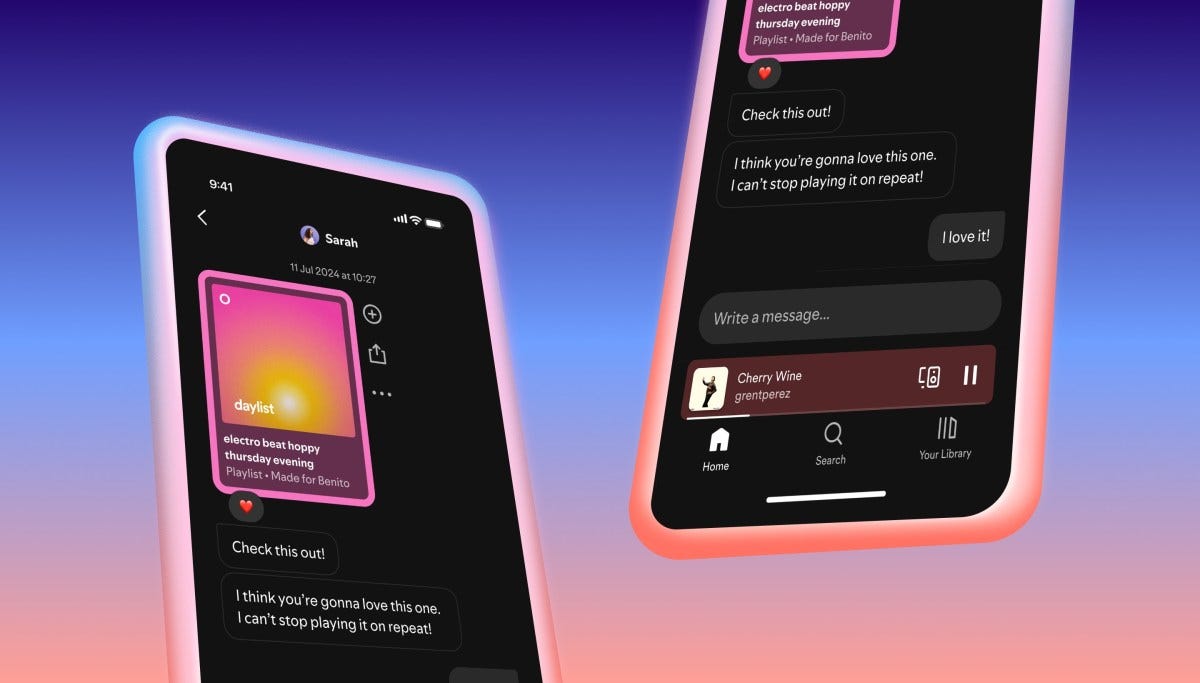
Spotify launches a messaging feature in a bid to become more social
Spotify has launched a new in-app messaging feature called Messages, allowing users aged 16 and older to chat one-on-one and share songs, podcasts, or audiobooks with existing connections made through collaborative features like playlists, Jams, Blends, or shared Family/Duo plans. Initially rolling out in select mobile markets, the feature includes a dedicated inbox, text and emoji reactions, and privacy controls such as message request approvals, user blocking, and the option to opt out. Messages are encrypted in transit and at rest, though not end-to-end, and Spotify will monitor for harmful content with reporting tools available. This update revives a messaging function removed in 2017 and reflects Spotify’s broader push to become more social and interactive, now supported by a significantly larger user base of 696 million monthly active users as it aims to reach 1 billion.
#Streaming
Netflix wants its partners to follow these rules when using gen AI
Netflix has released new generative AI production guidelines aimed at ensuring ethical and responsible use of AI by its content partners. The policy outlines five key principles: avoiding replication of copyrighted or identifiable works, prohibiting training AI on production footage, using secure enterprise tools, limiting AI-generated content to temporary assets, and not replacing performers or union-covered work without consent. If these conditions are met, partners only need to notify Netflix, but if uncertain, they must seek written approval. Sensitive uses like final deliverables, talent likeness, personal data, or third-party IP require escalation. While low-risk applications such as mood boards are permitted with notification, the overall goal is to balance creative innovation with legal safeguards and audience trust, especially as Netflix expands AI use in areas like VFX, personalization, and advertising.
#LLMs
Microsoft AI launches its first in-house models
Microsoft has unveiled its first in-house AI models: MAI-Voice-1, an ultra-efficient speech model that generates a minute of audio in under a second using just one GPU and is already powering features like Copilot Daily and podcast-style discussions, and MAI-1-preview, a text-focused large language model trained on 15,000 Nvidia H100 GPUs designed to handle everyday, consumer-oriented queries. These models complement, rather than replace, Microsoft’s ongoing use of OpenAI models in Copilot; they are currently available for testing via platforms like Copilot Labs and LMArena, underscoring Microsoft’s strategy to balance its reliance on OpenAI with its own expanding AI capabilities.

#Productivity
Piloting Claude for Chrome \ Anthropic
Anthropic has launched Claude for Chrome as a controlled research preview, enabling the AI assistant Claude to operate directly within users’ browsers via a sidebar interface, capable of viewing pages, clicking buttons, filling forms, and performing tasks like calendar management, email drafting, and website testing for improved productivity. The pilot is currently limited to 1,000 subscribers on the Max plan (priced between $100 and $200 per month), with a waitlist open for others. Recognizing the substantial security risks, Anthropic conducted extensive red-teaming, which revealed prompt-injection attacks succeeded 23.6% of the time without safeguards. The company has since implemented layered defenses, such as site-level permissions, mandatory confirmations for high-risk actions, and blocking certain categories, which reduced attack success rates to around 11.2%, or even to zero in some cases. Yet, Anthropic admits that vulnerabilities persist and will continue refining safety measures before any broader rollout.